

Few Polish spa towns can tell a story in which a dead frog plays a central role. Does it sound like the beginning of a local legend? And indeed it is. According to a story passed down in Świeradów-Zdrój, it was the small amphibian that drew attention to the extraordinary properties of the local springs. Over time, the frog became one of the town's symbols, and to this day, you can encounter its images while strolling through the spa. But Świeradów-Zdrój owes its fame not solely to legends. The town's history as a spa town stems primarily from its mineral waters, radon waters, mud, mountain microclimate, and over 200 years of spa treatment tradition.
Why have spa guests been coming here for centuries? What is so special about Świeradów's waters? And why did the frog become the town's symbol? Let's go back a few centuries.
Why is Świeradów-Zdrój a spa town?
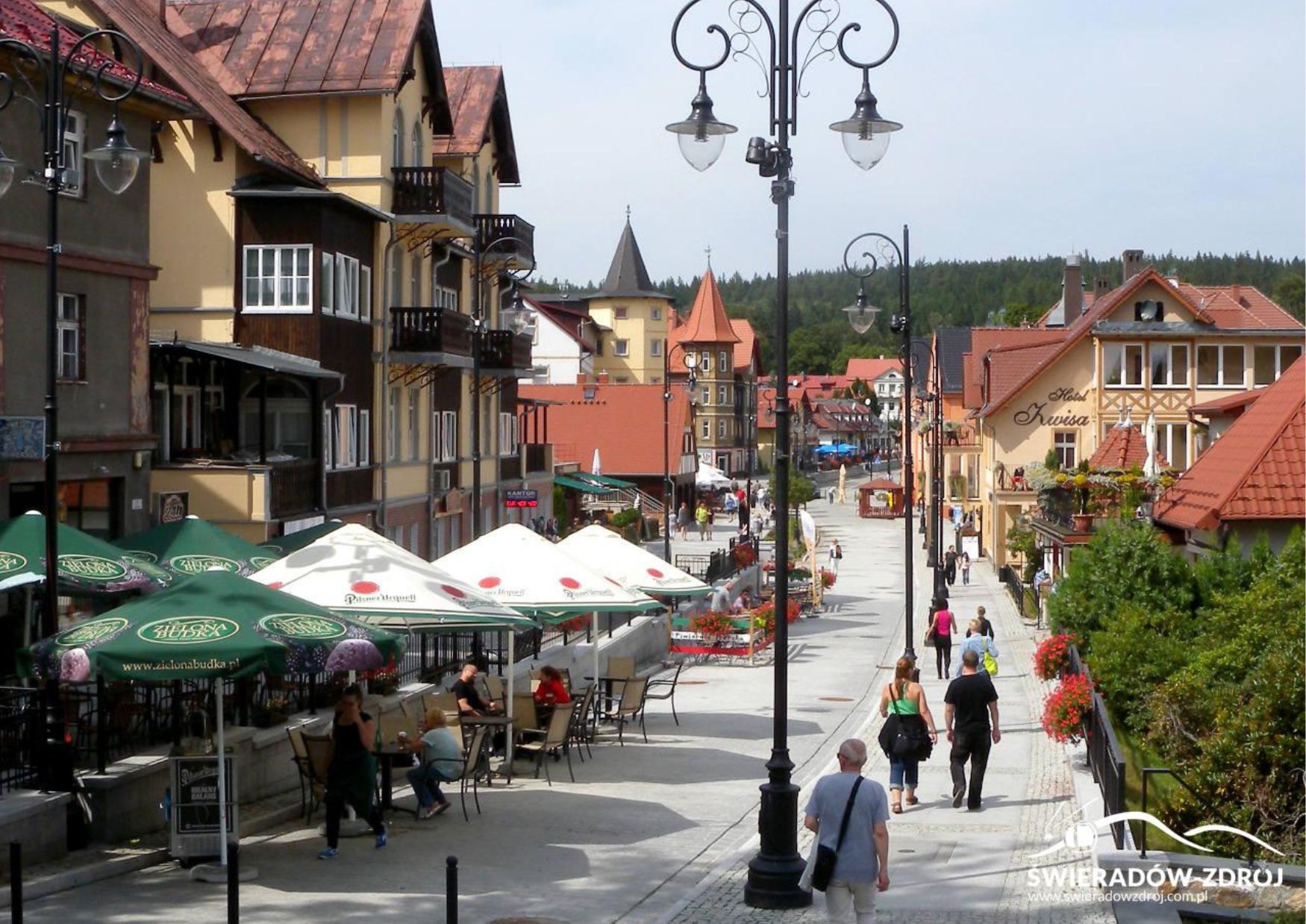
Located in the Jizera Mountains, Świeradów-Zdrój has built its spa history around the natural resources found in this part of the Sudetes. The Świeradów-Czerniawa Spa boasts mineral waters, radon, peat, and spruce, used in various forms of balneological and natural therapy. The most distinctive element of Świeradów's healing practices, however, is its radon waters. It is these waters that make Świeradów-Zdrój stand out from many other spa towns in Poland. Furthermore, its location amidst the forests of the Jizera Mountains and its unique mountain microclimate have long been an important part of the local spa tradition.
Radon Waters in Świeradów-Zdrój – What Does It Actually Mean?
Radon is a naturally occurring, colorless, and odorless radioactive gas produced by the decay of uranium present in rocks and soil. It can also penetrate groundwater. In Świeradów-Zdrój, radon-containing waters are used as part of controlled spa treatments, including balneotherapy. Contemporary research on radon therapies continues to evolve. A systematic review and meta-analysis published in 2025 showed, among other things, better results in terms of pain reduction in the medium and long term in some patients with musculoskeletal conditions compared to radon-free water treatments.
However, it is important to clearly distinguish controlled medical treatments from long-term exposure to radon in buildings. The World Health Organization indicates that chronic exposure to elevated radon concentrations indoors increases the risk of lung cancer. Therefore, radon treatments should be used in appropriately prepared facilities and in accordance with medical indications. This is an important distinction, because the term "radon waters" does not simply mean "radon is healthy." The Świeradów tradition is based on specific, controlled spa treatment methods.
What is treated in Świeradów-Zdrój?
Świeradów-Zdrój has a very broad range of spa treatments. The official list of treatments includes, among others, the following diseases:
• orthopedics and trauma,
• rheumatology,
• nervous system,
• upper and lower respiratory tract,
• peripheral vascular disease,
• skin,
• osteoporosis,
• cardiology and hypertension,
• diabetes,
• selected gynecological diseases.
This, of course, does not mean that a stay in Świeradów-Zdrój is a form of treatment for these conditions. Spa treatment utilizes specific procedures, natural resources, and rehabilitation tailored to the individual patient. It is around these natural resources that the history of the town began to develop.
The History of Świeradów-Zdrój - It All Began with a Spring
Local legends about the extraordinary waters date back to the 12th century, but the first documented information appeared much later.
1572 - "Holy Spring"
One of the most important dates in the history of Świeradów-Zdrój is 1572. It was then that the Berlin physician and scholar Leonard Thurneysser mentioned the local mineral waters in his work, describing the Świeradów spring as a "holy spring." This is considered the first written record of the local waters. The famous legend of the frog is associated with Thurneysser, but we will return to this later.
1738-1739 - The Waters Come Under Medical Scrutiny
Another breakthrough came in the 18th century. In 1738-1739, the local spring was examined, and a commission was appointed to confirm its healing properties. This moment can be considered one of the foundations for the subsequent development of a professional spa. It's worth noting an interesting detail: the healing properties of the waters were recognized much earlier, while studies of their radioactivity did not begin until the early 20th century. The Spa Mining Museum dates the waters of Górny Źródło (Upper Spring) to 1907, when they were tested for radioactivity. This is a significant difference between historical knowledge of the "healing spring" and the later scientific identification of radon.
18th Century - A True Spa Is Born
In the following decades, the springs began to be increasingly protected and utilized. In 1781, the Spring House was built, which became the predecessor of today's Spa House. Świeradów was increasingly transforming from a small mountain village into a health resort. At that time, the name Bad Flinsberg was used, remaining in use until the end of World War II. After the war, the name Wieniec Zdrój was briefly used, and in 1946, the name Świeradów-Zdrój was officially introduced. That same year, the town received city rights.
Spa House - the heart of Świeradów's spa town
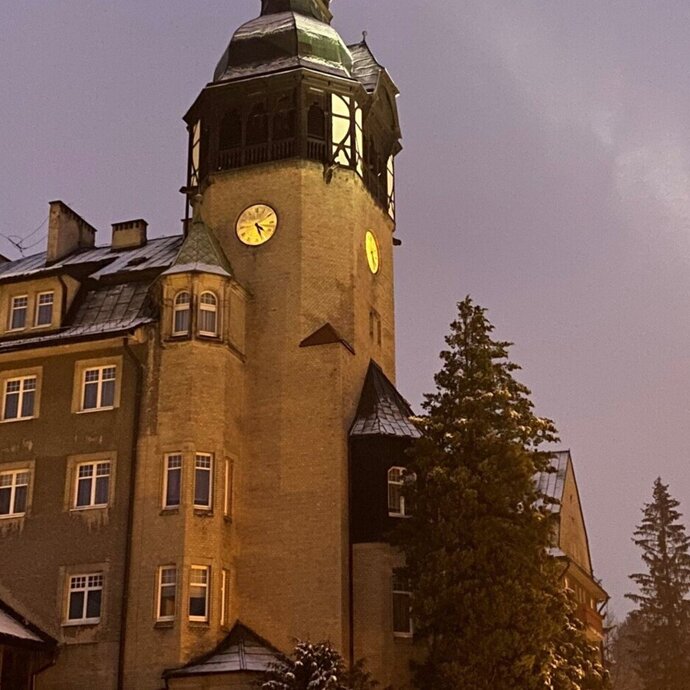
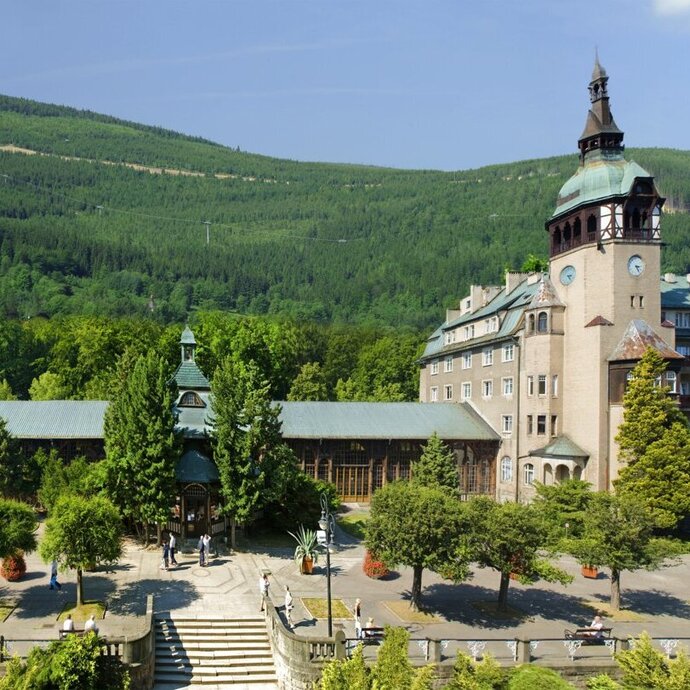
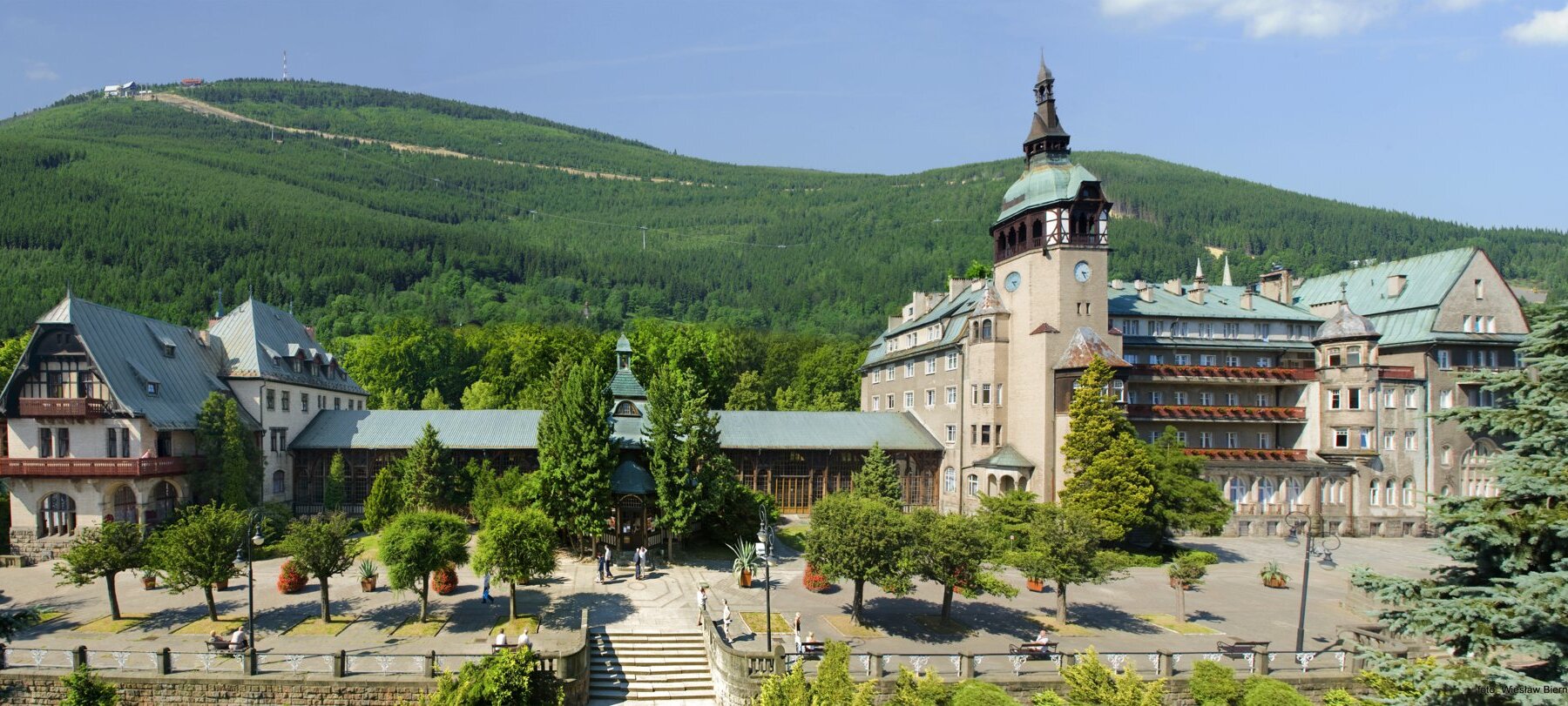
If there's one place where the history of the spa can be felt particularly strongly, it's the Spa House in Świeradów-Zdrój. The first Spring House, dating from 1781, was destroyed in a fire on December 14, 1895. The Schaffgotsch family quickly began reconstruction, and in 1899, the new Spa House, designed by Wrocław architect Grosser, welcomed its first patients. Today, one of its most distinctive features is the 80-meter-long wooden Walking Hall. Its interior features plant polychromes, stained glass windows, and the von Schaffgotsch family coat of arms. At the entrance, a spring of radon-iron water is located. A stroll through the hall is therefore more than just a visit to a historical monument. It's an entrance to a space that has remained a symbol of the town's spa character for over a century.
The Spa Museum - a Hidden History Beneath the Pump Room
Those interested in the history of Świeradów-Zdrój should also visit the Spa Mining Museum, also known as the Spa Museum. It was established in 2014 in the rooms beneath the pump room. The exhibition traces the history of the Świeradów springs and the development of the spa itself. It is here that the story of radon, ancient methods of water extraction, and the first spa guests becomes much more tangible.
Why is the frog a symbol of Świeradów-Zdrój?
And now for the most extraordinary part of this story. According to Świeradów legend, Leonard Thurneysser noticed a dead frog lying in a spring during one of his walks. This wouldn't have been remarkable, except that on subsequent visits, he reportedly noticed that its body was not decomposing. The story was later connected to the extraordinary properties of the local waters. And so, the unassuming frog took on a life of its own, now part of a local legend. However, it's important to separate legend from documented history. It's true that Thurneysser described local springs in 1572. The dead frog motif, however, belongs to the town's traditions and stories, not to scientific proof of the healing powers of the waters.
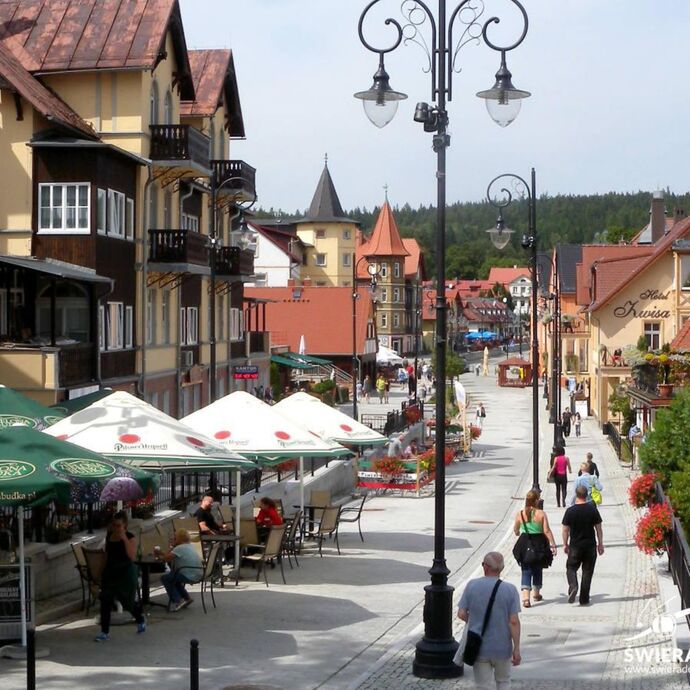
Today, the frog is one of the most distinctive symbols of Świeradów-Zdrój. Its images can be found, for example, on the spa promenade, where bas-reliefs depicting the frog appear. This is an interesting case where local legend, scientific history, and the town's marketing have merged into a single symbol.
Świeradów-Zdrój – a spa town worth slowly discovering
History is present at almost every corner in Świeradów-Zdrój. You can start your day with a stroll through Spa Park, stroll through the historic Walking Hall, visit the pump room and Spa Museum, look for Świeradów frogs on the promenade, and then set off on one of the mountain trails. And this combination is one of the town's greatest assets.
Świeradów-Zdrój is not just a spa town or a base for trips to the Jizera Mountains. The spa's history, architecture, natural springs, and mountain surroundings create a single narrative. During your stay at Forest Park Resort & SPA, it's worth finding time not only for mountain attractions and relaxation, but also for a walk in the footsteps of the town's history. It's difficult to truly experience Świeradów-Zdrój without understanding why it has attracted people to its springs for centuries and what a certain frog has to do with it all.
FAQ - Świeradów-Zdrój and its spa properties
What is Świeradów-Zdrój spa famous for?
Świeradów-Zdrój is primarily known for its mineral waters, including radon waters, as well as the use of peat and other natural resources in spa treatments.
Does Świeradów-Zdrój contain radon waters?
Yes. Waters containing radon are one of the most characteristic natural resources associated with local spa treatments.
Why is the frog a symbol of Świeradów-Zdrój?
According to local legend, Berlin physician Leonard Thurneysser noticed a dead frog in one of the springs, which seemed to have taken a long time to decompose. The story was later linked to the properties of the local waters, and the frog became one of the symbols of the city.
When was the Spa House in Świeradów-Zdrój built?
The current Spa House was opened in 1899, following a fire in the previous Spring House in 1781.
What is worth seeing to learn about the town's spa history?
The Spa House, the 80-meter-long Walking Hall, the pump room, Spa Park, the spa promenade, and the Spa Mining Museum are all worth visiting.
Author of the post

Julia Pągowska
Marketing and Social Media Specialist

Responsible for the communication and content marketing of Forest Park Resort & SPA. She creates social media content, records video materials, takes photos, and designs graphics and promotional materials for the hotel. She also prepares blog content related to relaxation, travel, and regional attractions.
In her materials, she focuses above all on the guest experience, showing places not only aesthetically but also practically, authentically, and from the perspective of people planning their stay. Privately, she is a lover of mountains, travel, dog walks, and places she wants to return to more than once.